WHOLE-HOUSE GENERATOR COST: 2026 PRICING GUIDE
A whole-house standby generator has two main cost components: the generator unit itself and professional installation. Both vary widely with size, fuel, and site conditions. This guide gives you honest ranges and the factors that drive the final number — then points you to live per-model pricing on our product pages and a free quote for the exact installed total.
New to whole-house backup? Start with our pillar page: Whole House Generators — what they are, how to pick a size, and the top units we install.
Generator unit cost by size
Unit cost scales primarily with kilowatt rating and cooling platform. Here's the general framing — for current per-model pricing, see each product page on our shop or standby generators catalog.
- Air-cooled residential (~13–22 kW) — the most affordable tier. Cummins RS13A, RS17A, RS20A (also coded C13N6H, C17N6H, C20N6H) are the volume sellers here. Unit pricing typically starts in the low-to-mid four figures for the smallest air-cooled units and scales up with kW.
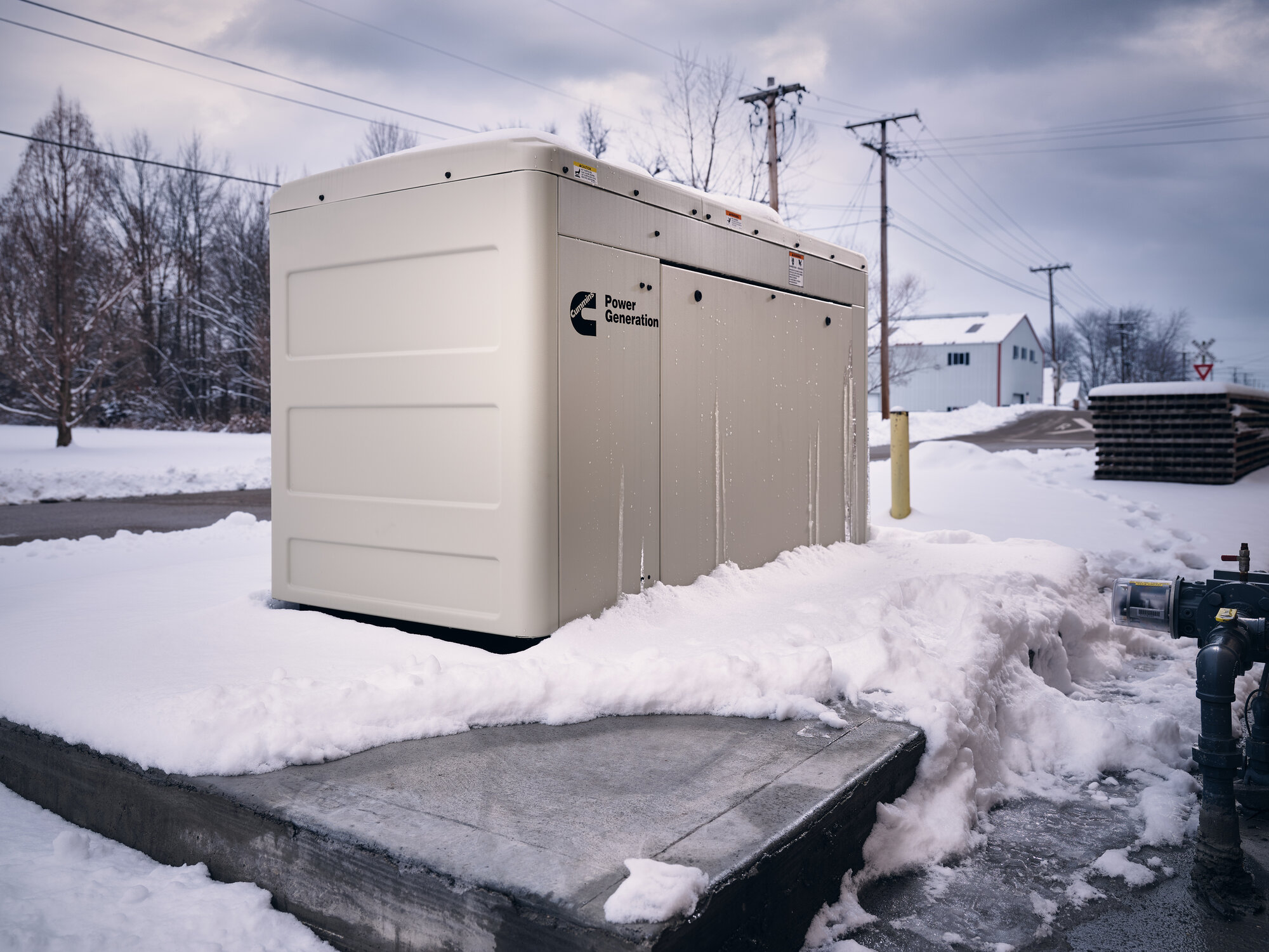
- Liquid-cooled gas (25 kW and up) — Cummins RS25 / C25N6 and larger. Bigger engines, radiator cooling, and larger physical footprint move these into a higher price tier than air-cooled.
- Diesel standby (always liquid-cooled) — Cummins C-series diesel units like the C20D6 and up. Diesel platforms typically cost more than equivalent-kW gas units because they're built for heavier sustained duty.
Large liquid-cooled and diesel units can reach well into the five figures for the unit alone. Bottom line: there's no single "generator price" — it depends on size, fuel, and configuration. Our product pages show current pricing per model.
Installation cost factors
Installation is the variable most homeowners underestimate. Two identical generators on two different properties can have meaningfully different install costs. The drivers are:
- Gas line run and meter capacity — distance from the gas meter to the generator pad, pipe sizing, and whether your meter needs to be upsized to deliver enough BTUs.
- Electrical wiring and transfer switch — conduit run from the generator to your service panel, plus the automatic transfer switch (ATS) and any sub-panel work.
- Concrete pad — pre-cast pads for smaller air-cooled units are quick; large liquid-cooled and diesel units may need a poured pad and excavation.
- Permits and inspection — required almost everywhere; fees vary by jurisdiction.
- Distance from panel and meter — longer trenching, more wire, more pipe, more labor.
- Load management — some installs add a smart load management module so a smaller generator can cover a bigger home; this adds parts and labor but can lower the unit cost.
- Region — labor rates, permit costs, and code requirements vary by state and city.
For typical residential air-cooled installs the install line item commonly runs in the low four figures; larger liquid-cooled or diesel installs with long gas runs, electrical upgrades, and permitting can push the install figure significantly higher. The only way to know your number is a site-specific quote.
Total installed cost
Total installed cost = unit price + install. Because both halves vary, a single "installed price" doesn't really exist for whole-house generators — but a free quote gives you the real number for your home in writing.
How we work:
- NC & SC: we install turnkey — unit, transfer switch, gas, electrical, permits, and start-up. We provide a single installed quote based on a quick site review.
- Rest of the lower 48: we ship the generator free to your door and help you spec the install for your local licensed contractor. You get factory pricing on the equipment with no install markup.
You can see our installation coverage on the service area page or request a quote regardless of location — we'll point you in the right direction.
How to control the cost
A few practical moves keep total cost in line without compromising on the right generator:
- Right-size with the calculator. Don't overbuy. A correctly sized 20 kW unit serves a typical home better than an oversized 26 kW that idles most of the time. Run our free 60-second sizing calculator first.
- Consider essential-circuit coverage. If full whole-home backup pushes the budget, backing up a curated set of essential circuits (HVAC, fridge, well, key outlets) with a smaller unit can cut total cost significantly.
- Use 0% APR financing. 0% APR financing is available on qualifying orders — spread the cost over fixed monthly payments without interest. Many customers use this to comfortably step up one size class.
- Buy from a factory-authorized dealer. Authorized dealers protect your factory warranty and ensure the unit is registered correctly. Cheaper grey-market units often forfeit warranty coverage and resale value.
For deeper context, read our related guides on what size generator you need, air-cooled vs liquid-cooled, and our brand-specific Generac generator cost guide — all directly affect your final price.
FAQ
- How much does a whole-house generator cost?
- Total installed cost varies widely with size, fuel, and site complexity. Air-cooled residential units (roughly 13–22 kW) are the most affordable tier and typically run a few thousand dollars for the unit alone, while liquid-cooled gas (25 kW+) and diesel units can reach well into five figures. Live per-model pricing is shown on each product page, and a free quote gives you the exact installed number for your home.
- How much does generator installation cost?
- Installation cost depends on gas line length and meter capacity, electrical wiring to the panel and transfer switch, the concrete pad, permits, inspection, and whether load management is needed. Two homes with the same generator can have meaningfully different install costs. We provide a free site-specific install quote in NC and SC; outside that area we'll help you spec the job for your local installer.
- Does a generator add value to my home?
- A professionally installed standby generator is a permanent improvement that buyers in storm-prone or rural areas often value highly. It can also reduce home insurance claims related to outages (frozen pipes, food loss, sump failure). Specific resale impact varies by market — talk to a local real estate professional for your area.
- Is 0% APR financing available for generators?
- Yes — 0% APR financing is available on qualifying orders, which lets you spread the cost over fixed monthly payments without interest. Many homeowners use financing to step up one size class (for example, 22 kW to 26 kW) without changing their monthly budget. See the financing page for current terms.
- What makes one generator more expensive than another?
- Three main factors: kW rating (bigger engines cost more), cooling platform (liquid-cooled units cost more than air-cooled), and fuel type (diesel units cost more than equivalent gas units because they're always liquid-cooled and built for heavier duty). Brand and included accessories like a matched transfer switch also affect price.
Not sure where to start?
Run our free 60-second sizing calculator or talk to a generator pro for a no-pressure quote.