
STANDBY VS PORTABLE GENERATORS
Standby and portable generators are sometimes pitched as alternatives, but they're really different tools for different jobs. Here's how to think about the trade-offs honestly.
The short version
- Standby = permanently installed outside your home, hardwired through a transfer switch, runs automatically on natural gas or propane, sized for whole-home or essential-circuit backup.
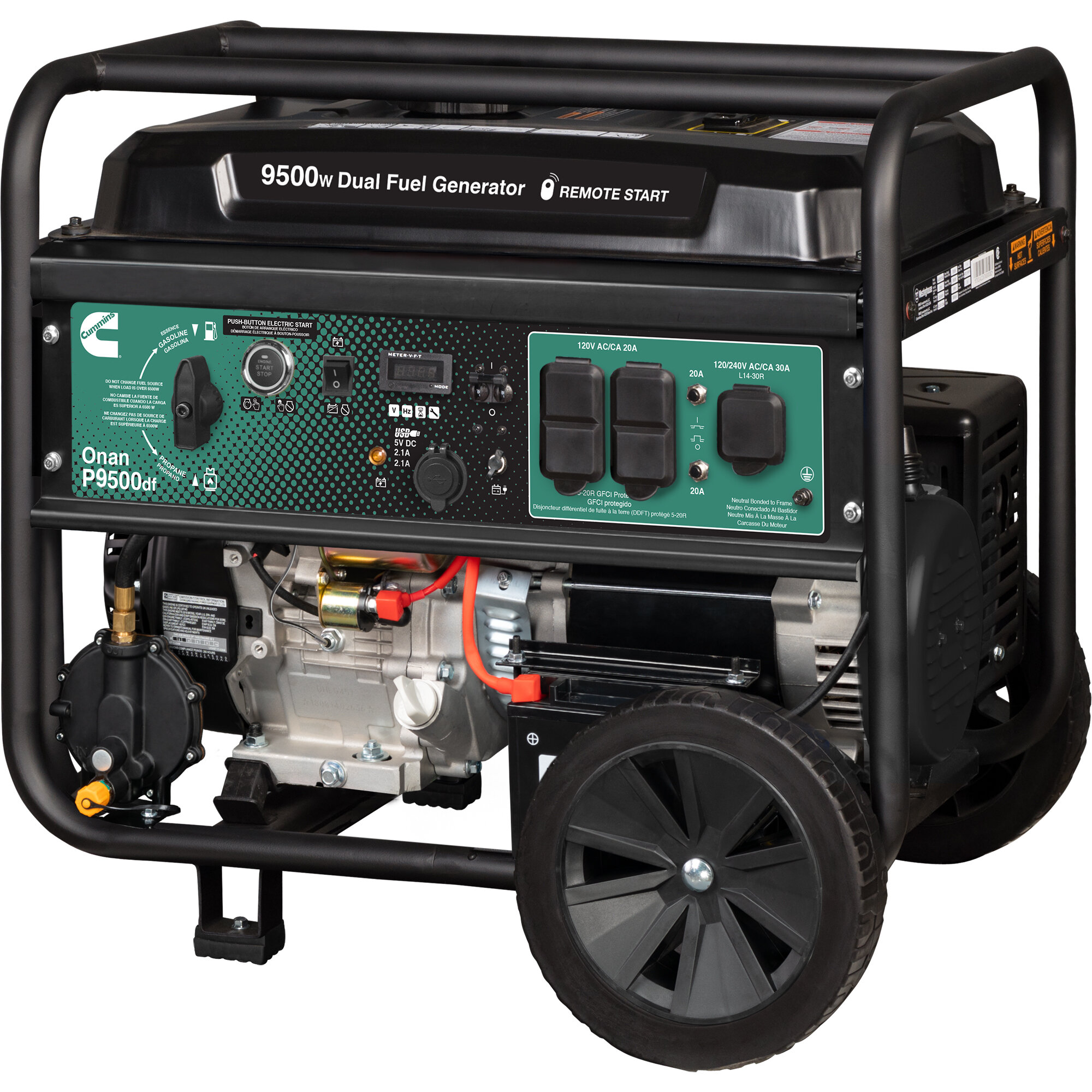
- Portable = movable, fueled manually (gasoline, propane, or dual-fuel), plugs into appliances or an inlet box, requires you to be there to start it and switch loads.
If you want hands-off backup that "just works" while you're away, you want standby. If you want flexibility and a lower up-front price, a portable can be the right call.
Installation
Standby generators require a concrete or composite pad, a gas line connection sized for the BTU draw, an automatic transfer switch (ATS) wired to your main service, and a permit + inspection in most jurisdictions. We handle the full install across NC and SC; request a free quote for an exact price.
Portable generators don't need install at all — out of the crate, oil and fuel, pull-start or electric-start, and you're running. For house backup, you'll want a manual transfer switch and an inlet box, which a licensed electrician can install in a day.
Fuel
Standby units run on natural gas or LP. Natural gas means unlimited runtime as long as the gas line is intact. LP requires a tank.
Portables typically run on gasoline, with dual-fuel models adding propane. Gasoline needs stabilizer if you store it more than a few months. Propane lasts indefinitely, so dual-fuel portables are popular for emergency-only use.
Automatic vs manual operation
Standby = automatic. Power fails, generator senses it, exercises the ATS, and runs your house within ~10 seconds. When utility power returns, it retransfers and shuts down on its own.
Portable = manual. You go outside, start it, run a cord (or throw the manual transfer switch), and reverse the process when power comes back. Not a problem if you're home — a serious problem if you're not.
Runtime and capacity
Standby air-cooled units run from 10kW to 26kW, liquid-cooled from 25kW up to commercial sizes. With utility gas, runtime is effectively unlimited.
Portables typically range from 2kW (inverter, for sensitive electronics) up to about 13kW (large dual-fuel). Runtime per tank is usually 8–14 hours depending on load.
Cost considerations
Up-front, portables are dramatically cheaper. Standby units cost more, and turnkey install (pad, gas, electrical, ATS, permit) adds to that. Over a 15–25 year life, a standby generator amortizes well if you experience regular outages or work from home; for a vacation cabin used twice a year, a portable often makes more sense.
We carry both, and we'll tell you which is right for your situation. Browse standby · Browse portable · Run sizing.
Who each suits
- Standby: primary residence, work-from-home, medical equipment, frequent outages, two-income households where nobody can be home to start a portable, larger homes with HVAC and well pumps.
- Portable: occasional outages, jobsites, RVs, tailgating, vacation homes, renters, or as a cheaper essential-circuit solution with a manual transfer switch.
FAQ
- Which is better — standby or portable?
- Neither is universally better. A standby generator is better for hands-off whole-home backup. A portable is better when you need power that goes where you go, or when budget rules out a permanent install.
- Can a portable replace a standby for outages?
- With a manual transfer switch and an inlet box, a 7,500–12,000W portable can cover essential circuits during an outage. You'll still need to start it, fuel it, and switch the transfer switch manually.
- What about cost?
- Portables are cheaper to buy. Standby units cost more, especially after install, but they run automatically and last for decades with maintenance. The right answer depends on how much you value uptime and convenience.
Not sure where to start?
Run our free 60-second sizing calculator or talk to a generator pro for a no-pressure quote.