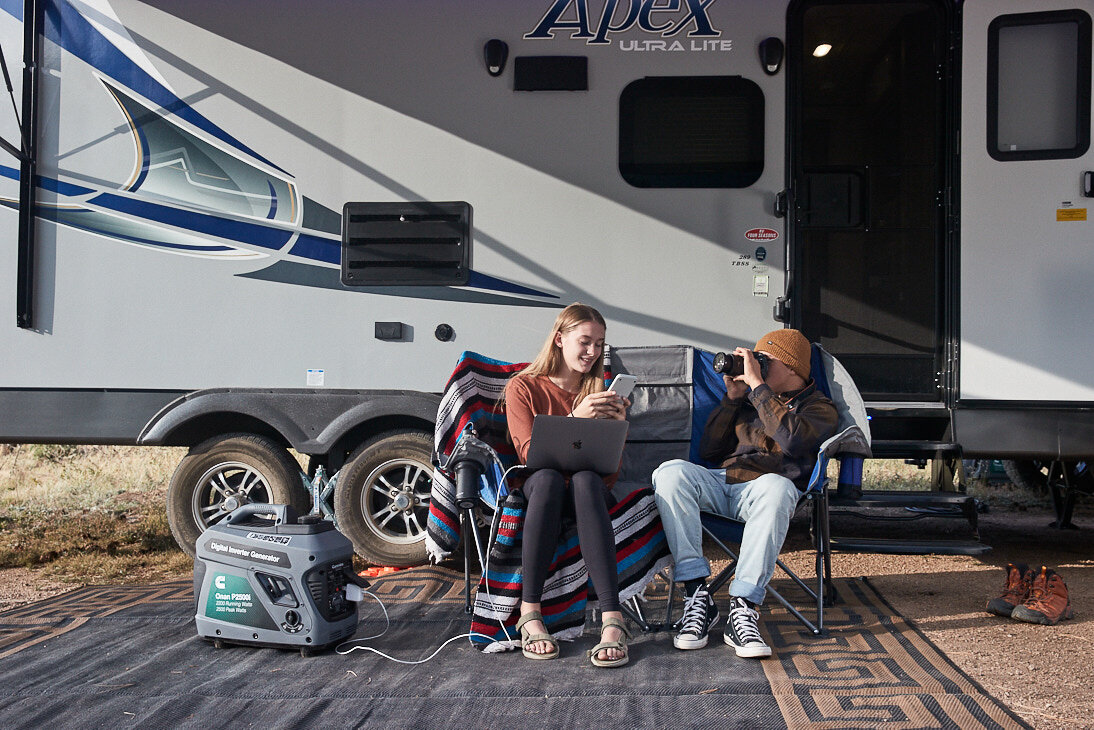
WHAT SIZE GENERATOR DO I NEED? HOME STANDBY SIZING GUIDE
Picking the right kilowatt (kW) rating is the single most important decision when buying a home standby generator. Too small and it won't carry your AC's startup surge; too big and you're paying for capacity you'll never use. Here's how to size it right.
The two ways to size a generator
Every sizing conversation starts with one question: do you want whole-home backup or essential circuits only?
- Whole-home — every breaker stays live during an outage. Lights, HVAC, kitchen, well, EV charger, the works. More convenient, more kW, more money.
- Essential circuits — you pick a handful of must-haves (fridge, furnace, well pump, a couple of outlets, maybe one AC) and back up only those. Cheaper, smaller generator, but you have to think about what really matters when the power's out.
The safest, fastest way to get a real answer for your home is to run our free 60-second sizing calculator — it asks about your square footage, HVAC, and major appliances and gives you a recommended kW range in under a minute.
How generator sizing actually works
A generator's kW rating is the simultaneous electrical load it can carry — not the total wattage of every appliance in the house. The number that matters is "what's running at the same moment the AC compressor kicks on?"
The big drivers of generator size are almost always:
- Central air conditioning — a 5-ton AC has a large startup surge and is usually the single biggest load in the house.
- Well pump — small running watts, but a heavy starting surge.
- Electric range and electric dryer — high steady draw when in use.
- EV charger — a Level 2 charger can pull 7–11 kW continuously, which radically changes sizing.
- Electric water heater — high draw, but can usually be load-shed.
Smart load management modules (sometimes called power management) can shed lower-priority loads when a big motor starts, which lets a smaller, less expensive generator cover a bigger home. Any good installer will spec these alongside the unit.
Quick sizing guide by home size
These are starting points, not final answers — your appliances, HVAC, and electrical service decide the real number. Use them to set expectations, then confirm with the calculator or our team.
- Essential backup (smaller homes / partial coverage): ~10–14 kW. Fridge, furnace, well, lights, a few outlets, sometimes one window/mini-split AC.
- Most homes / whole-home air-cooled: ~18–22 kW. Average single-family home with one central AC, gas appliances, and standard panel.
- Larger homes: ~24–26 kW. Two HVAC zones, electric range or dryer, finished basement, or above ~3,500 sq ft.
- Estates and light commercial: 25 kW+ liquid-cooled. Large or all-electric homes, multiple HVAC systems, or small businesses that need true continuous-duty capacity.
You can also browse our catalog by kilowatt once you know your range, or jump straight to shop standby generators.
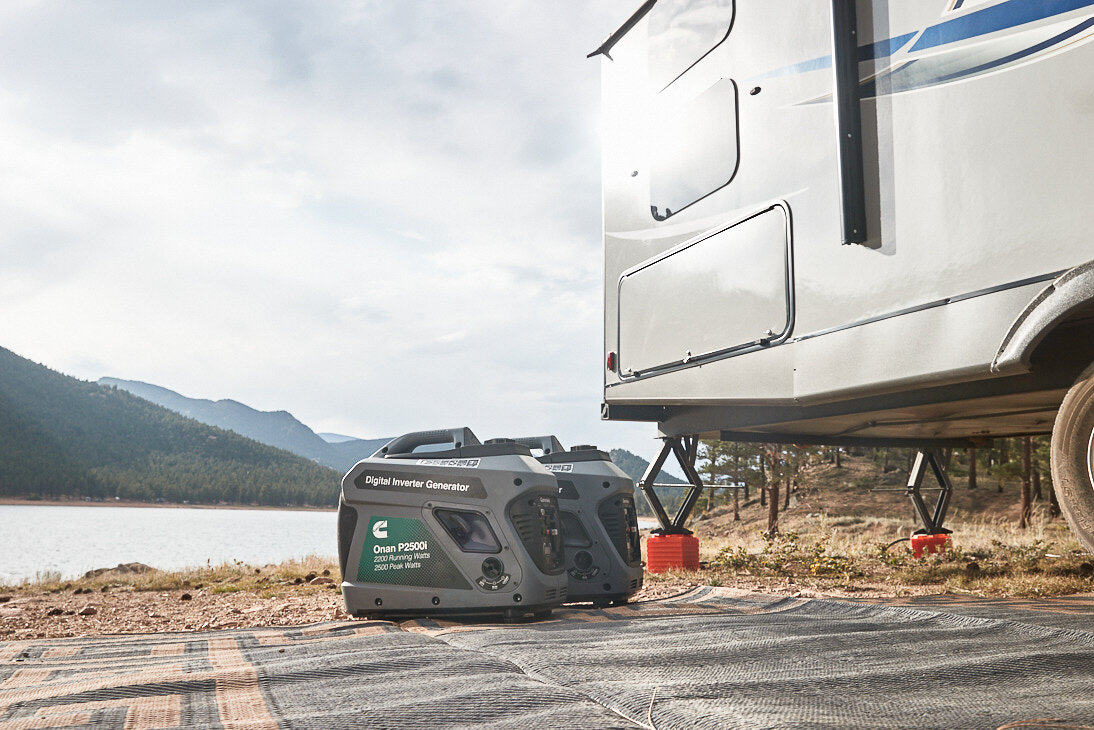
Air-cooled vs liquid-cooled
Home standby generators come in two engine platforms, and the dividing line matters more than the kW number alone.
- Air-cooled (~13–22 kW) — fan-cooled engines, smaller footprint, lower install cost. The Cummins air-cooled lineup (sold as RS13A, RS17A, RS20A, with the equivalent C-series model codes C13N6H, C17N6H, C20N6H) covers most single-family homes. Customers often search by the RS name — same unit either way.
- Liquid-cooled (25 kW and up) — radiator-cooled engines, larger displacement, built for sustained heavy load. Cummins' liquid-cooled residential units start with the RS25 / C25N6 and scale up from there. These are the right choice for larger homes, multiple HVAC systems, all-electric setups, and light commercial.
We sell both platforms with free nationwide shipping. If you're hovering around the 22–25 kW boundary, talk to us before you order — the right call depends on how the loads actually stack up, not just the headline kW.
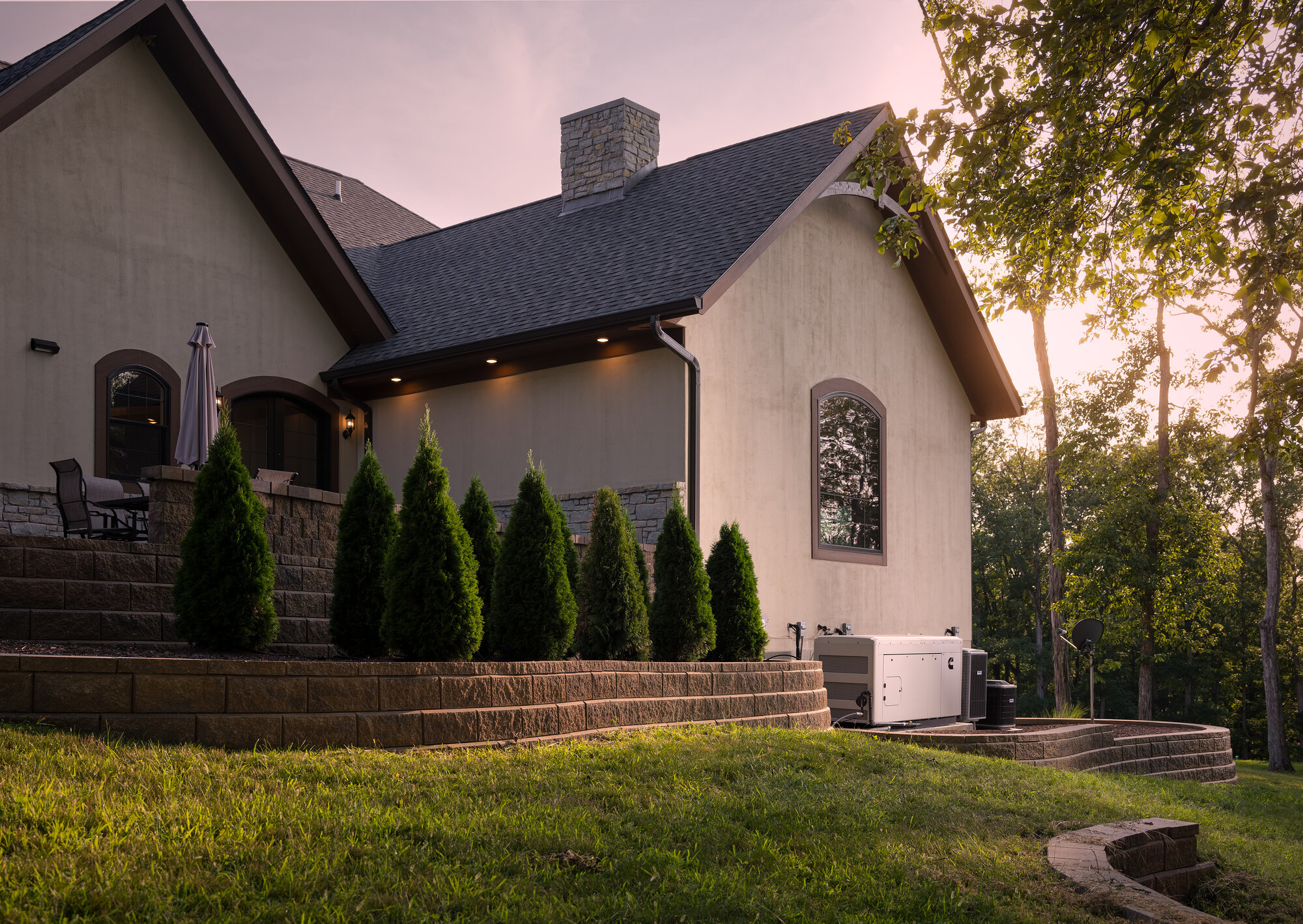
Fuel: natural gas vs LP vs diesel
- Natural gas (NG) — the default for most homes that already have utility gas service. Runtime is effectively unlimited because the fuel just keeps coming through the meter.
- Liquid propane (LP) — same generator engine in most cases, fed from a buried tank. Best for rural homes without natural gas service. Tank size sets your runtime.
- Diesel — used for commercial standby, large estates, and any application that needs long unattended runtime with no gas line. Liquid-cooled by design, regardless of kW.
How to confirm your size in one afternoon
- Run the 60-second sizing calculator for a recommended kW range.
- Get a free quote from us — send photos of your panel and a quick list of major appliances and we'll confirm the spec.
- Check 0% APR financing if you want to spread the cost — many homeowners step up one size class when they finance.
FAQ
- What size generator do I need to run a whole house?
- Most whole-house setups land between 18 and 26 kW. Smaller, well-insulated homes with one HVAC system are often fine on a 20–22 kW air-cooled unit, while larger homes with two HVAC zones or electric appliances usually need 24–26 kW (or a 25 kW+ liquid-cooled unit). The only way to get an accurate number is to total your simultaneous running and surge loads — our free 60-second sizing calculator does this for you.
- Will a 22kW generator power my entire home?
- For many average-sized homes with a single central AC, a 22 kW air-cooled standby is enough to run the whole house without load shedding. Larger homes, dual HVAC systems, electric ranges, or EV chargers can push you past what 22 kW can carry simultaneously. When in doubt, step up to 24–26 kW or use a smart load management module.
- What's the difference between air-cooled and liquid-cooled generators?
- Air-cooled generators (typically 13–22 kW, e.g. Cummins RS13A through RS20A / C13N6H–C20N6H) use fan cooling and are sized for residential use. Liquid-cooled generators (25 kW and up, e.g. Cummins RS25 / C25N6 and larger) use a radiator like a car engine, run cooler under sustained load, and are built for larger homes and light commercial applications.
- How do I know if I need a 20kW or a 24kW?
- The deciding factors are usually your air conditioning tonnage, whether you have an electric range or dryer, and whether you have a well pump or EV charger. A single 3–4 ton AC home leans 20 kW; a 5-ton AC, dual zones, or all-electric appliances push you to 24 kW. Run the sizing calculator or send us your panel photos and we'll confirm.
- Does a bigger generator use more fuel?
- Yes, but only when it's working harder. A larger generator at light load uses roughly the same fuel as a smaller one carrying the same load — engines are most efficient at moderate load. Oversizing slightly for headroom is fine; grossly oversizing wastes money up front and burns a bit more fuel at idle.
Not sure where to start?
Run our free 60-second sizing calculator or talk to a generator pro for a no-pressure quote.