HOW LOUD ARE HOME GENERATORS?
Noise is one of the top three questions we get — usually from someone picturing a construction-site machine roaring next to the patio. Good news: modern home standby generators are dramatically quieter than that, and the quietest models are genuinely unobtrusive. Here is what the numbers actually mean.
The real numbers
Modern air-cooled home standby generators typically operate in the mid-60s dBA measured at about 23 feet under load. For calibration:
- 60 dBA — normal conversation
- 65-70 dBA — a central air conditioner condenser (the thing already humming outside your house)
- 75-85 dBA — a typical portable generator (this is the noise people fear)
In other words: a standby unit at rated load sounds roughly like a second AC condenser. Inside the house with windows closed, most owners describe it as a low hum they stop noticing within a day of an outage.
Cummins QuietConnect models are among the quietest in the class — sound-attenuated enclosures are the core of that product line's identity — and Generac Guardian and Next Gen units publish competitive figures model by model. Exact dBA ratings are on each product's spec table in our catalog.
The weekly self-test is quieter still
Standby units exercise themselves briefly each week. Modern models run this test at reduced RPM — Generac's "Quiet-Test" runs near 57-60 dBA, noticeably softer than normal operation. You schedule the day and time, so it never runs during the Sunday nap.
Placement does as much as the spec sheet
- Distance: sound falls off fast — every doubling of distance drops roughly 6 dB. Placement 10 vs 20 feet from a bedroom window is a real difference.
- Walls and corners reflect sound; open placement is quieter than a tight alcove.
- Neighbors: good install practice (and some local codes) considers their windows too, not just yours.
- Code also sets minimum clearances from openings and combustibles — noise placement and safety placement get solved together in a proper install.
Liquid-cooled and portables
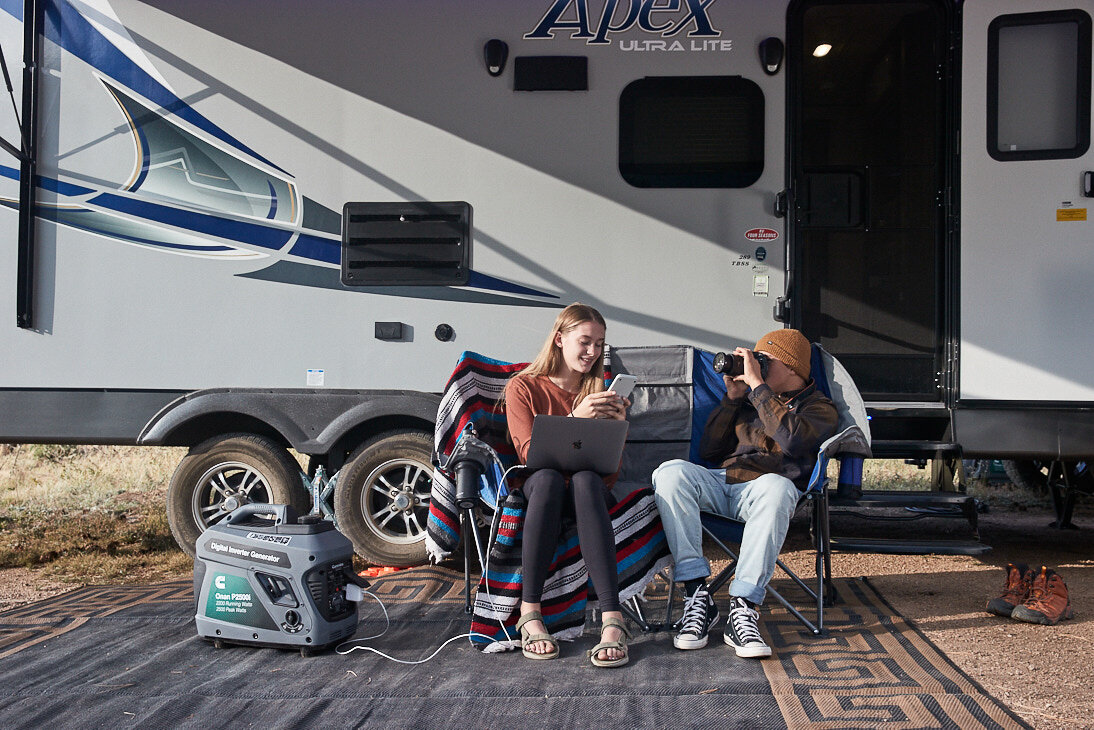
Liquid-cooled units run larger engines at lower RPM — often quieter per kW than air-cooled despite their size. Portables are the loud end of the market, which is one more reason they are a stopgap rather than a whole-home solution — see standby vs portable.
Hear it before you buy
In our NC/SC service area, the free on-site visit is a chance to talk real placement at your actual house. And every model's measured sound level is listed in its spec table on the standby generators catalog.
Frequently asked questions
- Is a standby generator louder than an air conditioner?
- They are in the same neighborhood. Modern air-cooled standby units run in the mid-60s dBA at rated load — comparable to a central AC condenser. Most homeowners describe it as a second AC hum, not a disturbance.
- Which home generator is the quietest?
- Cummins QuietConnect models are consistently among the quietest air-cooled units — sound attenuation is the line's signature. Liquid-cooled units can be quieter per kW thanks to low-RPM engines. Exact dBA ratings are listed on each product page in our catalog.
- Will my generator wake the neighbors during its weekly test?
- Unlikely — modern units run their weekly self-test at reduced RPM (around 57-60 dBA, quieter than normal operation), it lasts only minutes, and you choose the day and time it runs.
- Can I put my generator further from the house to make it quieter?
- Yes, within limits — sound drops roughly 6 dB per doubling of distance. But longer gas and electrical runs add install cost, and code sets clearance rules. A good installer balances noise, cost, and code in the placement plan.
Not sure where to start?
Run our free 60-second sizing calculator or talk to a generator pro for a no-pressure quote.