DO I NEED A TRANSFER SWITCH? AUTOMATIC TRANSFER SWITCHES EXPLAINED
A transfer switch is the device that safely connects your generator to your home's electrical system and prevents dangerous backfeed onto the utility line. Every permanent standby generator install needs one — the only real question is which type, what size, and whether it's bundled with your generator or purchased separately.
What a transfer switch does
A transfer switch is the electrical gate between your home, the utility grid, and your standby generator. Its job is threefold:
- Isolates your home from the grid during an outage so your generator doesn't energize the neighborhood lines.
- Routes your home's load to the generator when utility power is lost, and back to utility power when it returns.
- Prevents backfeed — a lethal condition where generator power flows backward into utility lines, endangering line workers and violating electrical code.
Without a transfer switch, there is no safe, code-compliant way to connect a standby generator to your home's wiring. Extension cords to individual appliances are the only alternative, and they don't power hardwired systems like central AC, well pumps, or your panel.
Automatic vs manual
Transfer switches come in two operating styles, and the right one depends on your generator type and how hands-on you want to be.
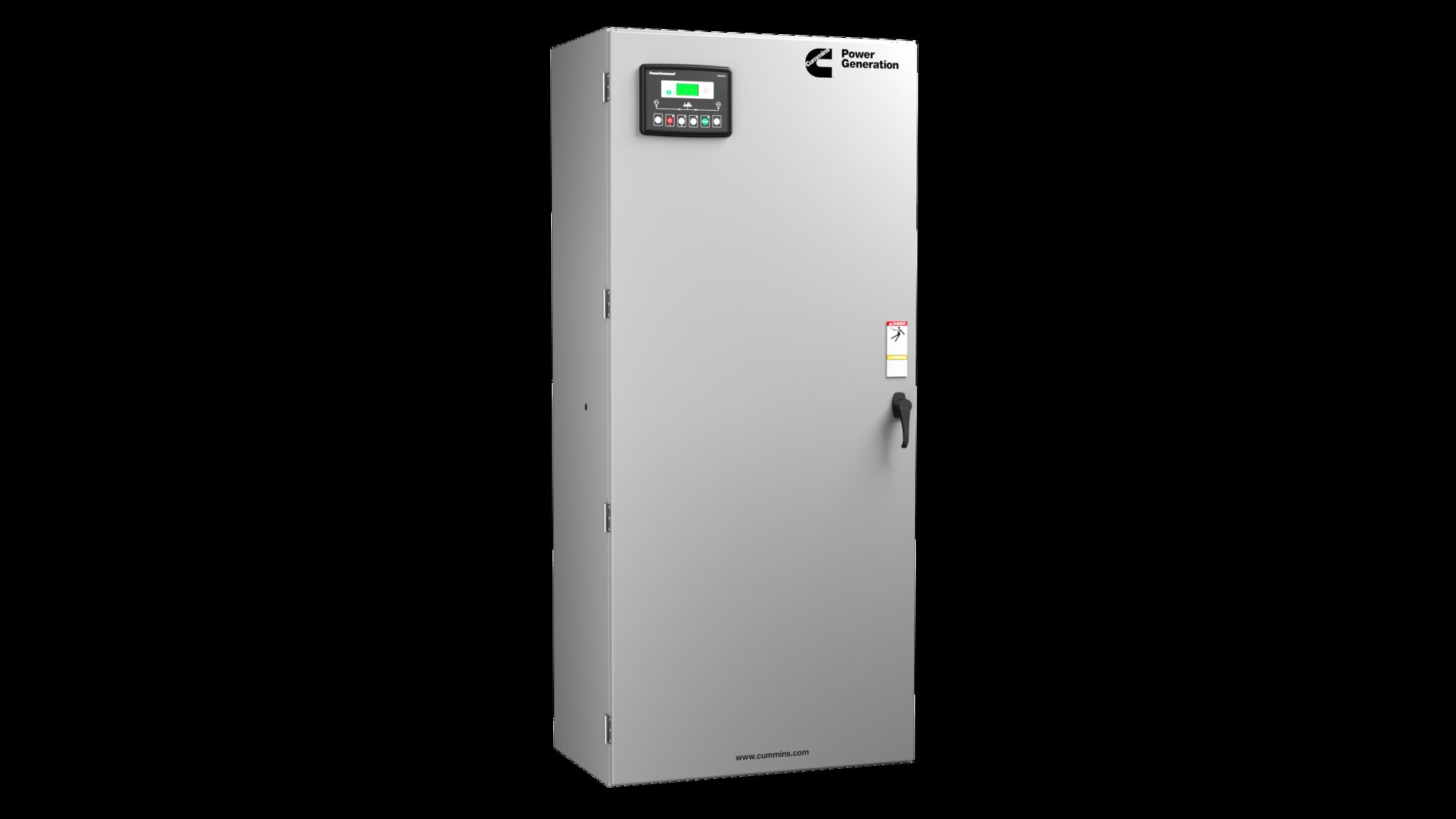
- Automatic Transfer Switch (ATS) — the standard for whole-home standby generators. The ATS monitors utility voltage. When it senses an outage, it signals the generator to start, waits for it to reach stable speed, then transfers the home's load to generator power. When utility power returns, it switches the load back and signals the generator to cool down and shut off. All of this happens without anyone home.
- Manual transfer switch — you physically move a lever or flip breakers to transfer the load. These are cheaper and simpler, but they require you to be present during the outage. Manual switches are common with portable generators, where the owner wheels the unit out, starts it, and then throws the transfer switch by hand.
If you're installing a permanent standby generator, an ATS is the right choice. It's the convenience and safety standard for automatic home backup power.
Service-entrance vs non-service-entrance
Within the automatic category, there's an important distinction that your installer will handle:
- Service-entrance rated (SE) — the ATS includes the main disconnect and can serve as the legal point of service entry. This often simplifies installations where the generator pad is closer to the meter than the existing main panel, or where local code requires it.
- Non-service-entrance — the ATS sits downstream of your existing main breaker and transfers a subset of circuits (or the whole panel, depending on wiring). Common in retrofit installs where the main panel stays in place.
The right choice depends on your existing panel layout, your electrical service size, and local code. A licensed electrician specs this during the site review — it's not a DIY decision.
Sizing the transfer switch
ATS sizing is straightforward: match the switch amperage to your electrical service and generator capacity.
- 100A service — typically pairs with a 100A ATS for whole-home coverage.
- 200A service — the residential standard; a 200A ATS is the common pairing for whole-home standby.
- Essential-circuit installs — a smaller ATS (100A or 150A) may be used if you're only backing up selected circuits rather than the full panel.
Cummins offers the OTEC line of automatic transfer switches in multiple amperages and configurations. You can browse transfer switches to see current models and specifications. The key is that the ATS, generator, and your home's service must all be compatible — your installer confirms this during the design phase.
For sizing context, also see our guide on what size generator you need — the generator kW and the ATS amperage are linked decisions.
Is it included?
Sometimes. Some generators ship as a combo with a matched ATS included — for example, certain Cummins configurations bundle the generator and a compatible OTEC switch in one part number. Other generators are sold as standalone units, and the ATS is selected and purchased separately based on your install requirements.
We sell both approaches:
- Combo packages — generator + matched ATS, ready for install.
- Standalone generators and ATS units — build your own package with the right amperage and features for your home.
You can shop transfer switches or browse standby generators to see what's currently available.
FAQ
- Do I need a transfer switch for a standby generator?
- Yes — every permanent standby generator installation requires a transfer switch. It's the critical safety device that isolates your home from the utility grid during an outage and routes your electrical load to the generator. Without a transfer switch, you cannot safely connect a standby generator to your home's wiring.
- What's the difference between an automatic and manual transfer switch?
- An Automatic Transfer Switch (ATS) senses a utility outage, signals the generator to start, and transfers the load automatically — no one needs to be home. A manual transfer switch requires you to physically flip a switch or breaker to move the load from utility to generator. Whole-home standby generators use an ATS by default; manual switches are common with portable generators.
- What size transfer switch do I need?
- Match the transfer switch amperage to your electrical service (commonly 100A or 200A for residential homes) and the generator's rated output. A whole-home install on a 200A service typically uses a 200A ATS. Smaller partial-coverage installs may use a 100A or 150A switch. Your licensed installer will confirm the correct size based on your service panel, local code, and whether you're covering the whole house or essential circuits.
- Is a transfer switch included with the generator?
- Some generators ship as a combo package with a matched ATS included — for example, certain Cummins models with a 'C' suffix or listed as a combo configuration. Other generators are sold as standalone units, and the ATS is purchased separately. We sell both pre-matched combos and standalone generators and transfer switches so you can build the right package for your install.
- Can I install a transfer switch myself?
- Transfer switch installation involves your main electrical panel, gas line, and utility service — it must be done by a licensed electrician and often requires permits and inspection. In many jurisdictions, DIY installation voids your homeowner's insurance or the generator's warranty if not performed by a licensed professional. Always hire a qualified installer and pull the proper permits.
Not sure where to start?
Run our free 60-second sizing calculator or talk to a generator pro for a no-pressure quote.